
AI for Restaurants and Hospitality: What's Actually Worth Automating
The best AI wins in restaurants and hospitality are behind the scenes: inquiries, quotes, reviews, scheduling and ordering. Here's what to automate and what to leave alone.
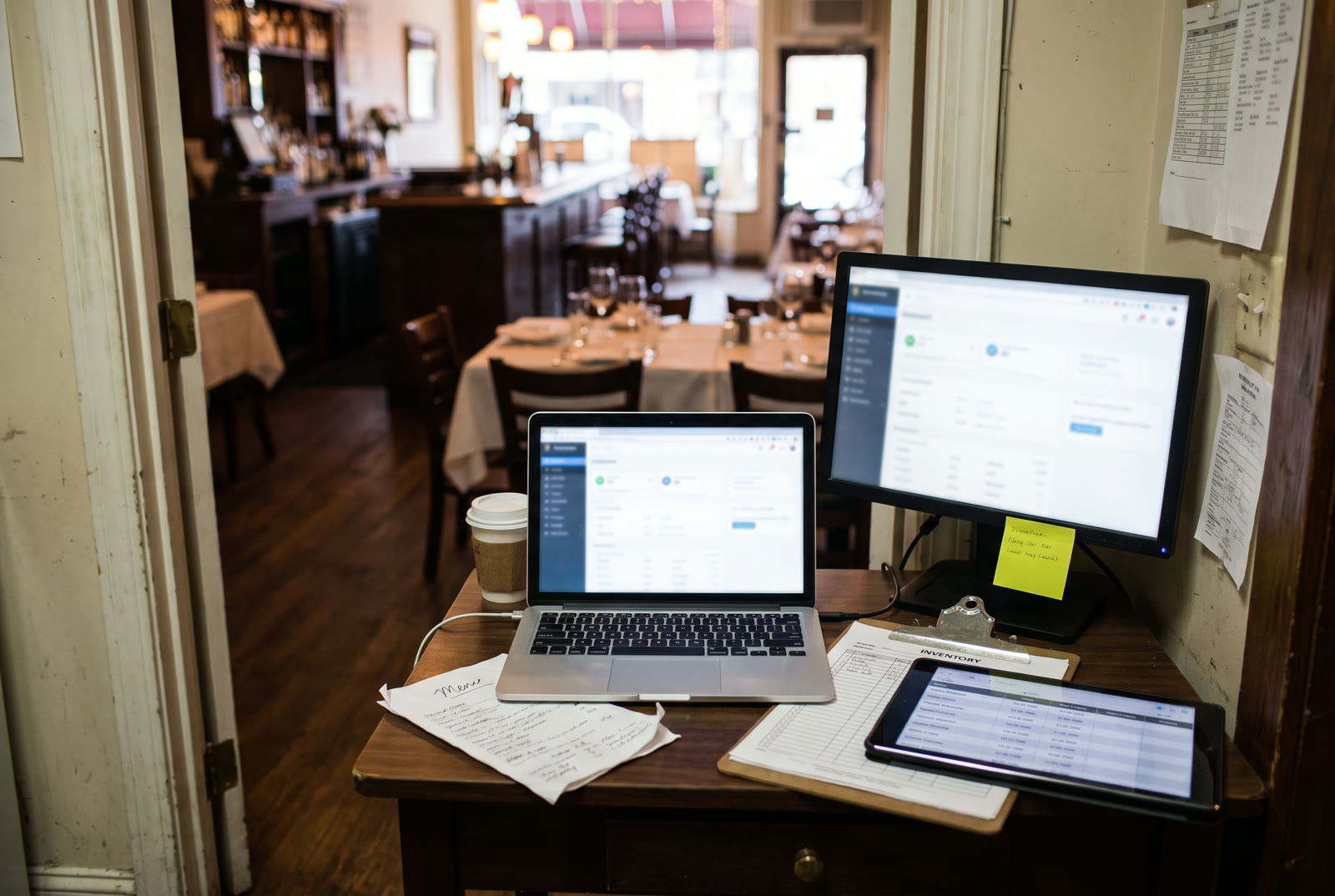
In a restaurant or hospitality business, AI pays off fastest behind the scenes, not on the floor. Catering inquiries, quotes, review replies, staff schedules, ordering and the endless "do you have availability on the 14th?" emails. That's where the hours go, and that's where AI gives them back. The guest experience stays human.
I'm not guessing at this. I started out waiting tables and bartending, and I built and ran a multimillion-dollar beverage catering company before I ever touched AI. I know what a Friday night feels like, and I know what Monday morning admin feels like after one. Most of the AI pitches aimed at restaurants miss both.
What not to automate
Let's get this out of the way first, because a lot of owners get sold the wrong thing.
Don't put a robot between your guests and your people. Nobody wants to argue with a chatbot about a wrong order. Nobody wants a "personalized" text that obviously isn't. Hospitality runs on someone actually caring, and guests can tell the difference in about three seconds.
So the rule I use is simple. AI does the prep work. People do the hospitality.
Where AI earns its keep
Catering and event inquiries. This is the big one. Inquiries come in at 11 p.m. through the website, Instagram, email and someone's cousin's text. They sit until a manager has time, and by then the customer booked somebody else. AI can answer the first round instantly, ask the right questions (date, headcount, location, budget, dietary needs), and hand your team a clean summary with a draft quote. A person reviews it and sends it. Speed wins catering, and this is how a small team gets fast.
Quotes and proposals. If you're rebuilding the same catering proposal from scratch every time, stop. AI can pull your menu, your pricing and your minimums into a draft in a couple of minutes. You check the numbers and add the personal touch.
Review replies. Every review deserves a response, and nobody has time to write forty of them a month. AI can draft replies in your voice, thank the happy guests by what they actually mentioned, and flag the unhappy ones for a manager to handle personally. Never let it auto-post a reply to a one-star review. That one's yours.
Staff scheduling. Time-off requests, swap texts, "can anyone cover Saturday?" AI can track requests, draft the schedule around your rules, and send the reminders. Your manager approves it instead of building it from scratch every week.
Ordering and inventory. AI is good at noticing patterns. It can compare what you ordered to what you sold, flag items you keep over-ordering, and draft next week's order from your counts. You still walk the cooler. It just does the math.
Menu and marketing copy. New seasonal menu, event announcement, weekly specials post, newsletter. AI drafts it, you tweak it, it's done in ten minutes instead of an hour you didn't have.
The weekly numbers. Sales by day, labor percentage, top sellers, what's slipping. AI can turn your POS exports into a plain-English summary every Monday so you know where to look before the week gets away from you.
A real-world order of operations
Don't do all of that at once. Here's the order I'd usually go in for a small restaurant, caterer or venue:
- Inquiries and quotes. Fastest payback, because it brings in money you're currently losing to slow replies.
- Review replies. Quick setup, helps your Google listing, and it shows up in AI search too.
- Scheduling. Saves the manager a few hours every single week.
- Weekly numbers. Once the basics run, you want to see what's working.
- Ordering. This one needs clean data, so it comes later.
Each step goes in, gets tested on real days, and gets adjusted before the next one starts.
Do you need new software?
Usually not. Most of this connects to what you already use: your email, your booking or catering platform, your POS exports, your scheduling app, your Google listing. Everything runs in a web browser. The only extra costs are the subscriptions and connectors that let those tools talk to each other, and you should know what those are before anything gets turned on.
What about my staff?
This is the question I get most from owners, and it's a fair one.
None of this replaces your servers, bartenders or cooks. It takes the admin off your managers so they can be on the floor during service instead of in the office answering emails. In my experience, the managers are the first ones to love it, because they finally get to do the job they were hired for.
Training matters, though. If your team doesn't understand how the new tools work, they'll work around them. Every setup I do includes training on your own day-to-day work, not a generic demo, so your people actually use it.
Where I come in
I work as an embedded fractional Chief AI Officer for a small number of companies across Dallas-Fort Worth, including hospitality and beverage businesses. That means I'm inside the business every month, building these tools, training the team and fixing what needs fixing. It's one monthly engagement, $4,000 to $10,000 depending on scope, and it covers the strategy, the builds, the training and the AI agents.
If you'd rather learn to set some of this up yourself, private coaching is a better fit and a lot less money.
Either way, it starts with a free 15 to 30 minute fit call. Tell me where the hours go in your operation, and I'll tell you honestly what AI can and can't do about it.
Want AI built into how your company runs?
I work as an embedded fractional Chief AI Officer for a handful of companies across Dallas-Fort Worth. The fit call is free and takes 15 to 30 minutes.